The Hidden Links Between Online Table Game Algorithms and Thoroughbred Performance Forecasting Tools
Amir Simon · Aug 26, 2026
The Hidden Links Between Online Table Game Algorithms and Thoroughbred Performance Forecasting Tools
Online table game platforms rely on complex algorithms to generate outcomes in games such as blackjack and roulette, while thoroughbred performance forecasting draws on statistical models to predict race results, and these two domains share underlying computational techniques that process large datasets and identify patterns. Developers in both fields apply machine learning frameworks, regression analysis, and simulation methods to handle variables ranging from card distributions to track conditions and horse pedigrees.
Core Algorithmic Foundations in Table Games
Random number generators certified by testing laboratories form the backbone of online table game fairness, and these systems often incorporate pseudo-random sequences refined through cryptographic methods. Data from regulatory reports in multiple jurisdictions shows that operators update these algorithms regularly to maintain compliance and adjust game volatility based on aggregated player metrics. Researchers at institutions like the University of Waterloo have examined how neural networks optimize payout structures without altering certified randomness.
Table game operators collect telemetry on session lengths, bet sizes, and decision trees, then feed this information into predictive modules that forecast player retention. These modules mirror the data pipelines used elsewhere in entertainment sectors, where historical sequences inform future projections. In August 2026 industry updates highlighted expanded use of cloud-based analytics platforms that process real-time inputs across thousands of concurrent sessions.
Thoroughbred Forecasting Models and Data Inputs
Thoroughbred performance tools aggregate past race times, workout data, jockey statistics, and environmental factors into multidimensional databases. Organizations such as Racing Australia publish standardized speed ratings that forecasting software converts into probability distributions for upcoming events. Analysts apply Bayesian updating and ensemble methods to weigh variables like surface changes or post-position advantages, producing expected finish positions expressed as percentages.
Equibase records provide granular metrics including fractional times and stride lengths that feed into machine learning classifiers trained on decades of results. These classifiers detect correlations similar to those identified in gaming datasets, where sequence dependencies influence outcome likelihoods. Studies from Canadian research groups have compared the accuracy of such models against traditional handicapping approaches across multiple racing seasons.
Shared Computational Techniques and Technology Transfer
Monte Carlo simulations appear in both table game testing and thoroughbred scenario modeling, allowing operators to run thousands of iterations that account for variance in card shuffles or race pace scenarios. Software libraries originally developed for financial risk assessment now support both casino game balancing and equine performance projections. Engineers have adapted gradient boosting frameworks to rank horses by projected margins while simultaneously calibrating table game return-to-player percentages.
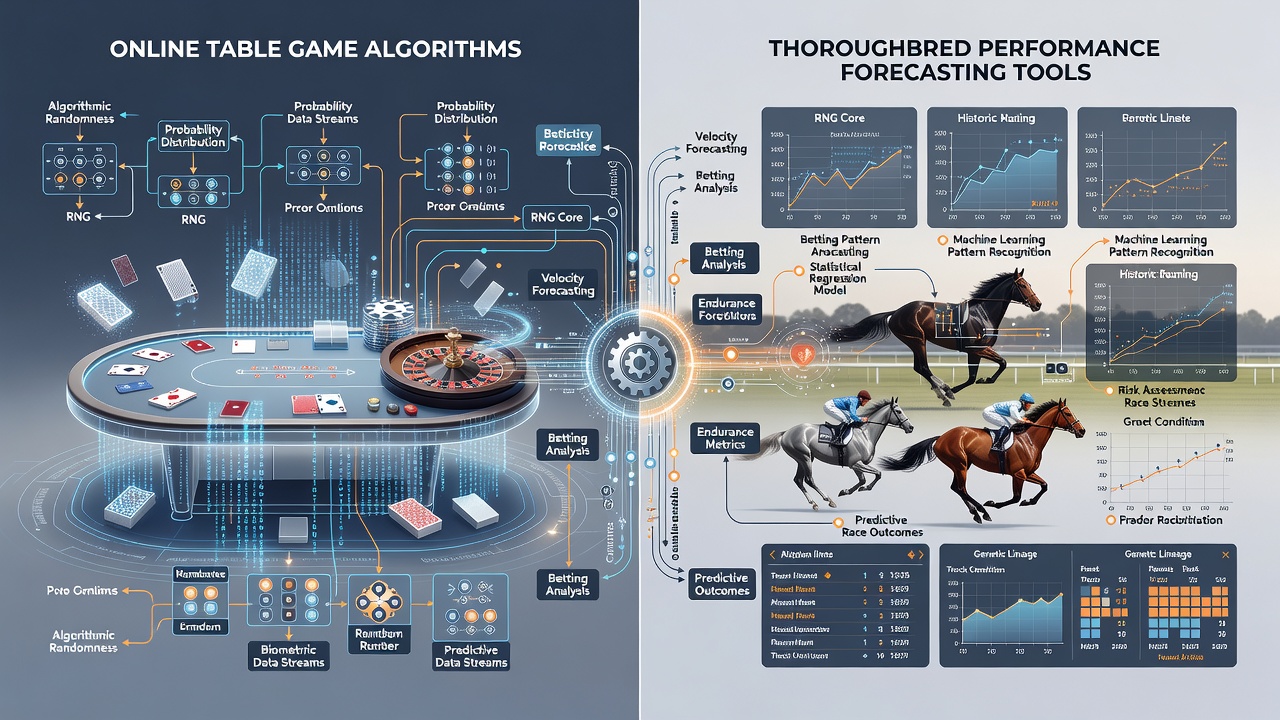
Pattern recognition routines scan for anomalies in gaming logs and race charts alike, flagging deviations that may indicate equipment issues or data entry errors. A 2025 technical paper from an Australian university outlined how transfer learning techniques trained on poker hand histories improved predictions for turf-to-dirt transitions in prep races. Companies supplying backend infrastructure to igaming platforms have extended similar services to racing data providers, creating overlapping vendor ecosystems.
Regulatory and Industry Developments Through 2026
August 2026 brought new licensing requirements in several North American markets that reference algorithmic transparency standards originally drafted for digital table games. These standards now extend to forecasting tools used by pari-mutuel operators, requiring documentation of model inputs and validation procedures. Industry associations have begun cross-sector working groups to align testing protocols, reducing duplication in third-party audits.
European data protection frameworks influence how both sectors handle anonymized user and horse records, prompting adoption of federated learning approaches that keep raw data localized while sharing derived features. Reports from the European Gaming and Betting Association note increased collaboration between software vendors serving casinos and those supporting racetrack analytics teams.
Conclusion
Algorithmic methods developed for online table games continue to migrate into thoroughbred performance forecasting through shared statistical tools and machine learning architectures. Data processing pipelines, simulation engines, and regulatory compliance frameworks create measurable overlaps that shape product development across both industries. Observers tracking August 2026 releases noted continued convergence in cloud analytics platforms and validation methodologies.