Satellite Wagering Networks Reshaping Participation in Harness Racing Events Nationwide
Amir Simon · Jul 13, 2026
Satellite Wagering Networks Reshaping Participation in Harness Racing Events Nationwide
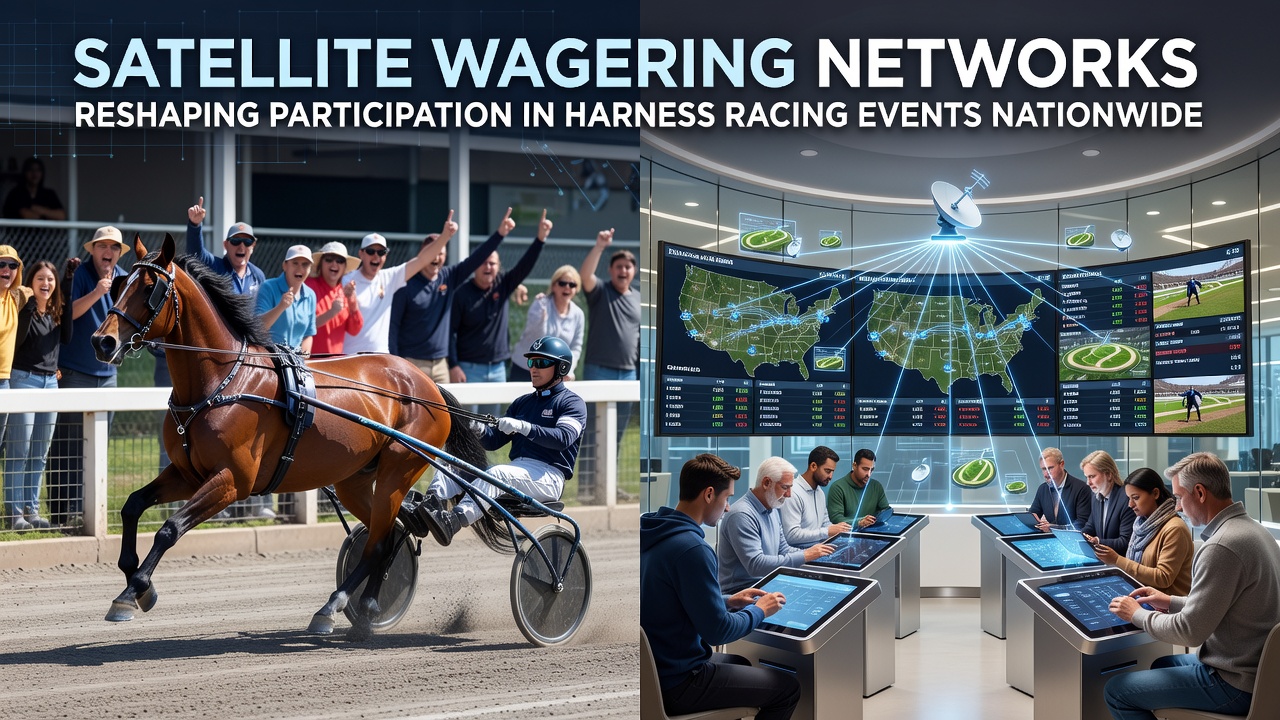
Satellite wagering networks transmit live harness racing signals from tracks to off-site locations including casinos, restaurants, and dedicated betting facilities; this infrastructure expands access for participants who cannot travel to major venues such as the Meadowlands or Yonkers Raceway. Data from industry reports indicates that these networks have broadened the geographic reach of standardbred racing, allowing bettors in states without local tracks to engage directly with events held elsewhere. The technology relies on dedicated satellite uplinks that deliver real-time video, odds, and pool information to authorized receivers, while state regulations govern the licensing of these reception sites. In practice, a wager placed at a remote terminal in Ohio can contribute directly to the pari-mutuel pool at a Pennsylvania track, and the same mechanism operates across dozens of jurisdictions. Observers note that the system integrates with existing totalisator companies to ensure accurate payout calculations and regulatory oversight.Expansion of Off-Track Access Points
Since the early 2000s, the number of satellite-linked terminals has grown steadily, with many new sites opening inside gaming facilities that already host slot machines or table games. This co-location creates convenience for patrons who combine harness racing wagers with other forms of entertainment. Figures released in July 2026 by several state gaming commissions showed that off-track handle from harness events increased by double-digit percentages in multiple regions compared with the previous year.
Those who manage these networks report that smaller rural communities now maintain at least one satellite outlet, reducing the distance bettors must travel. The addition of mobile apps connected to the same central systems further extends reach, yet the core satellite backbone remains essential for locations with limited broadband infrastructure. Researchers at land-grant universities have documented how these outlets sustain local employment at the reception sites while directing a portion of the handle back to the originating tracks for purse supplementation.
Effects on Attendance and Handle Distribution
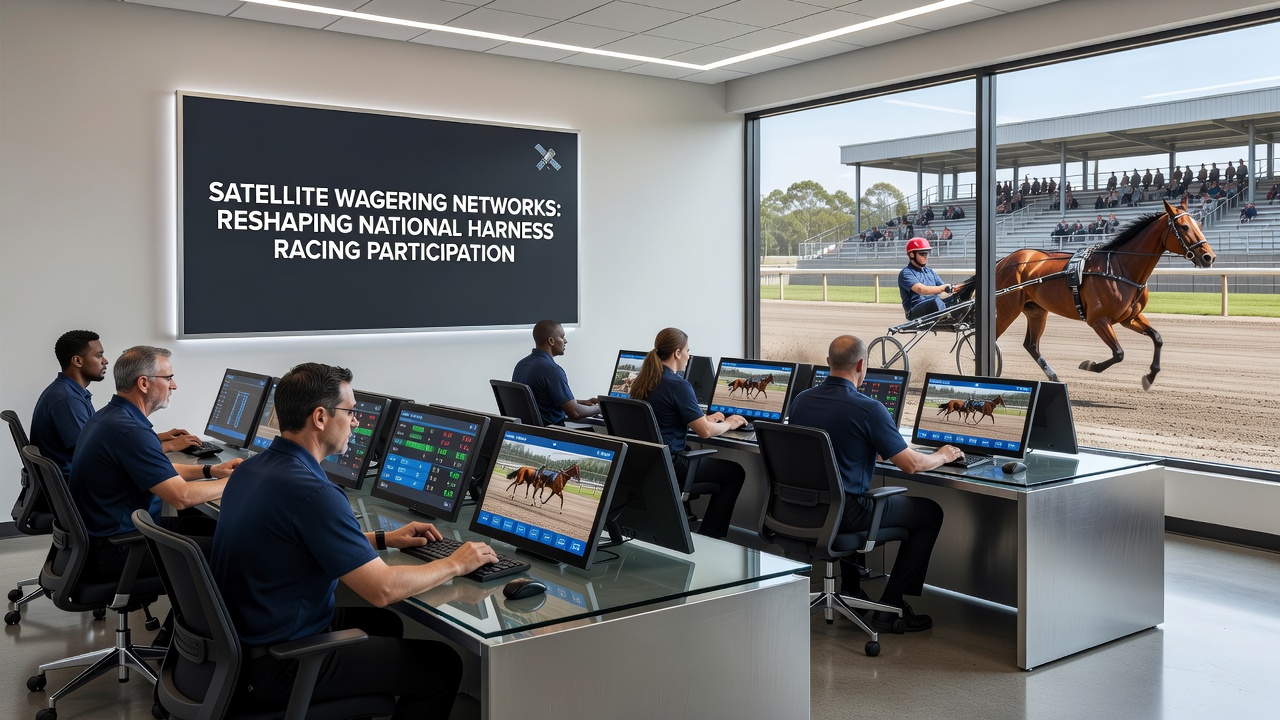
Track operators have adjusted schedules and marketing because satellite networks now account for the majority of total wagering volume on many harness programs. On-site attendance at some venues has declined, yet overall participation measured by unique betting accounts has risen. A 2025 analysis prepared for the United States Trotting Association found that states operating robust satellite systems recorded higher year-over-year growth in handle than states relying solely on in-person attendance.
Revenue sharing agreements allocate a percentage of the off-track handle to the host track, covering simulcast fees and contributing to breeder awards. These formulas vary by state statute, but the common structure ensures that successful races generate funds regardless of where the wager originates. In July 2026, several Midwestern commissions updated their distribution percentages after reviewing five-year performance data, illustrating how the networks continue to influence policy decisions.
Regulatory Framework Across Jurisdictions
Each state maintains its own licensing process for satellite facilities, requiring background checks, security standards, and compliance with age verification rules. Interstate compacts facilitate the transmission of signals across borders while preserving each commission's authority over local operators. The resulting patchwork creates operational complexity for network providers, who must maintain separate compliance teams for every jurisdiction they serve.
According to records maintained by the United States Trotting Association, more than 40 states currently authorize some form of satellite wagering on harness races. This geographic spread has encouraged standardization of data formats and security protocols, reducing technical friction when signals cross state lines. Canadian provincial regulators have adopted compatible technical standards, enabling limited cross-border simulcasting under bilateral agreements.
Technological Upgrades and Data Integration
Modern satellite networks incorporate high-definition video, automated odds boards, and instant replay features that replicate the experience once available only at the track. Backend systems now interface with player loyalty programs, allowing bettors to earn rewards across multiple reception sites. These integrations rely on encrypted data streams that protect both financial transactions and personal information.
Network operators have begun testing redundant satellite paths alongside terrestrial fiber connections to minimize service interruptions during severe weather. Such redundancy proved valuable during spring storms in 2026 when several primary uplinks experienced brief outages yet secondary feeds kept wagering terminals operational. The continuity maintained pool integrity and prevented the need for race cancellations or refunds that could otherwise erode public confidence.
Conclusion
Satellite wagering networks have become a permanent fixture in the harness racing ecosystem, redistributing participation patterns while preserving the pari-mutuel model that funds purses and breeding programs. Continued investment in transmission infrastructure, regulatory coordination, and data security will determine how these networks evolve alongside emerging digital platforms. State-level data collected through mid-2026 demonstrates sustained growth in off-track handle, confirming that the technology continues to connect a wider audience with live standardbred racing events across the country.