Patterns in Player Engagement Duration When Alternating Between Digital Roulette and Live Sports Markets
Amir Simon · Jun 13, 2026
Patterns in Player Engagement Duration When Alternating Between Digital Roulette and Live Sports Markets
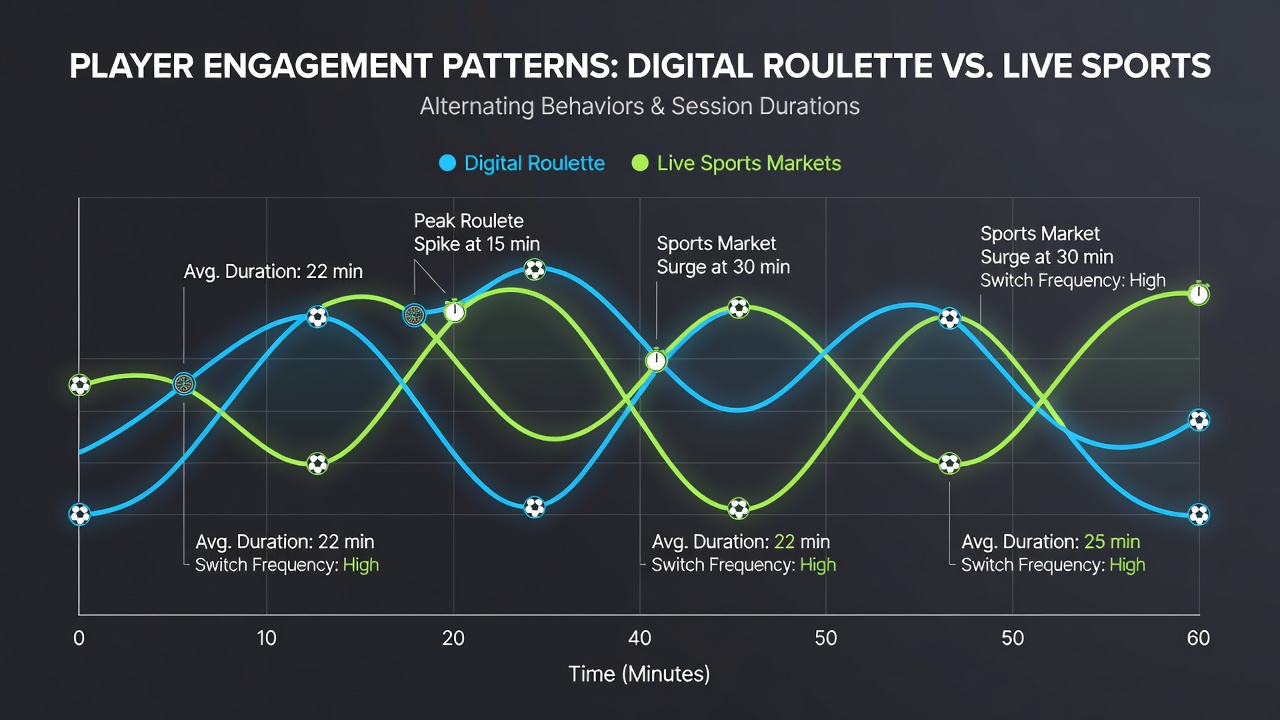
Analysts tracking online gambling behavior have documented distinct shifts in how long users remain active when they move between digital roulette tables and live sports markets, with session lengths often expanding or contracting based on the sequence of activity. Data collected through platform analytics in early 2026 indicates that players who begin with roulette spins tend to sustain shorter initial engagements before transitioning, while those starting in sports markets frequently extend their overall time online once they switch formats.
Session Length Variations Across Formats
Digital roulette operates on rapid cycles that encourage repeated short bursts of activity, with each spin completing in seconds and allowing immediate re-engagement. Live sports markets, by contrast, unfold over extended periods tied to game events, creating natural pauses that can stretch from minutes to hours. When users alternate between the two, engagement duration often follows predictable sequences where a brief roulette session precedes a longer sports market dwell time, or vice versa, depending on the starting point.
Studies compiled by the Australian Gambling Research Centre show average roulette-only sessions lasting between eight and twelve minutes, whereas sports market sessions average twenty-five to forty minutes during peak event windows. Cross-format alternation changes these figures, with combined sessions reaching fifty to seventy minutes when players switch at least once within the same login period.
Observed Transition Triggers in Mid-2026 Data
Platform logs from June 2026 reveal that transitions frequently occur after a sequence of three to five consecutive roulette outcomes, at which point users often open a live sports market tab. This pattern appears across multiple operator datasets and aligns with event timing in major leagues, where halftime or between-innings breaks coincide with roulette activity spikes. Operators report that such switches extend total engagement by an average of eighteen minutes compared with single-format use.
Regional Reporting Differences
Canadian provincial regulators have noted similar alternation effects in their 2026 quarterly summaries, where players in regulated markets demonstrate longer cumulative sessions when digital table games precede sports wagers. European data providers tracking multi-jurisdiction activity have identified comparable extensions, particularly during overlapping schedules of European football fixtures and North American baseball games.
Factors Influencing Duration Patterns
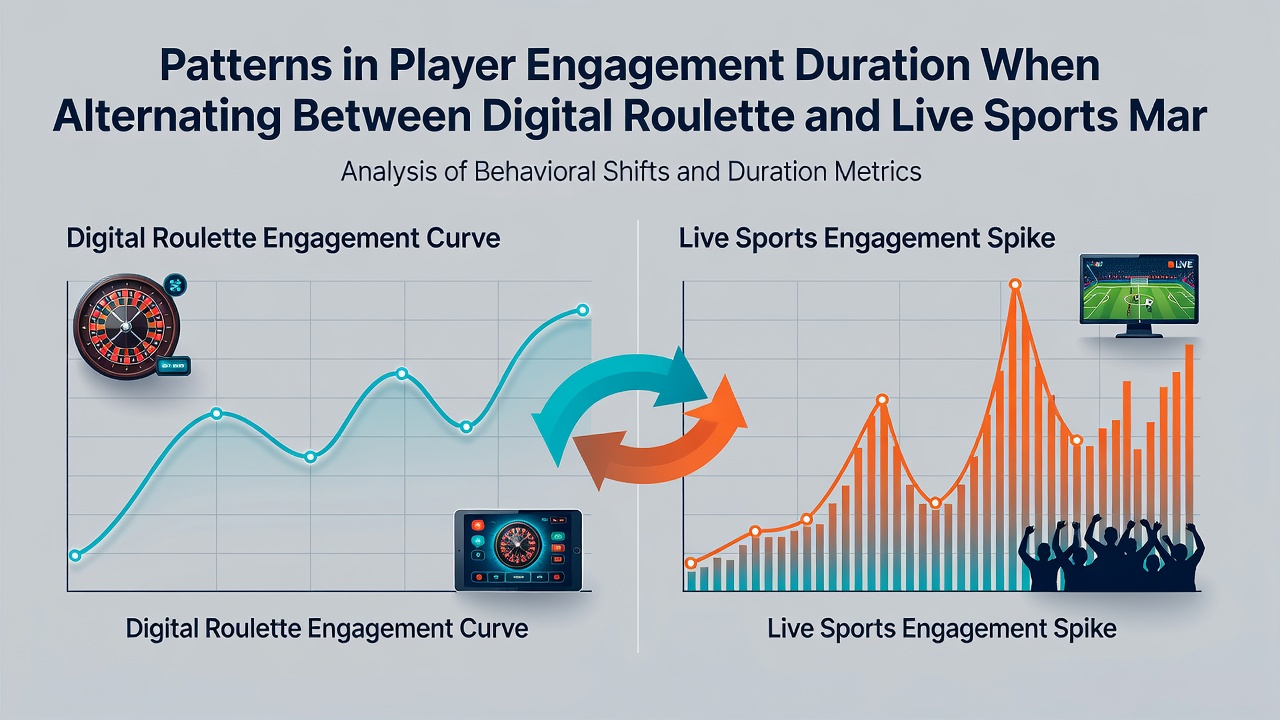
Event density in live sports markets plays a central role in how long players remain after leaving roulette. Markets tied to high-scoring or rapidly changing contests maintain attention longer once opened, whereas slower contests sometimes prompt returns to roulette within minutes. Researchers tracking these movements have found that users who experience a decisive roulette result are more likely to sustain sports market engagement through the conclusion of an event rather than cycling back quickly.
Device type also correlates with observed durations. Mobile sessions show shorter roulette segments before sports market switches, while desktop usage extends both segments by roughly thirty percent according to aggregated operator metrics. Account age introduces another variable, with newer accounts displaying more frequent back-and-forth movement and established accounts settling into longer single-format blocks once alternation begins.
Measurement Approaches Used by Industry Analysts
Engagement tracking relies on timestamped activity logs that record login duration, format switches, and logout triggers. Analysts apply sequence modeling to identify common pathways, such as roulette-to-sports-to-logout or sports-to-roulette-to-sports. These models help quantify how alternation modifies total time on platform compared with isolated use of either format.
Reports from the Nevada Gaming Control Board reference similar modeling applied to interstate online activity, confirming that alternation increases overall session length across regulated channels. Academic reviews of behavioral datasets have corroborated these findings through controlled observation periods that isolate format order effects.
Conclusion
Patterns emerging from 2026 platform data demonstrate that alternating between digital roulette and live sports markets produces measurable changes in engagement duration, with sequence order, event timing, and device type each contributing to the length of combined sessions. Continued collection of timestamped activity across jurisdictions provides ongoing clarity on how these transitions operate within broader usage trends.