Mapping Regulatory Nuances in Mobile Platforms for Equine Events and Table Games
Rafael Lange · Jul 15, 2026
Mapping Regulatory Nuances in Mobile Platforms for Equine Events and Table Games
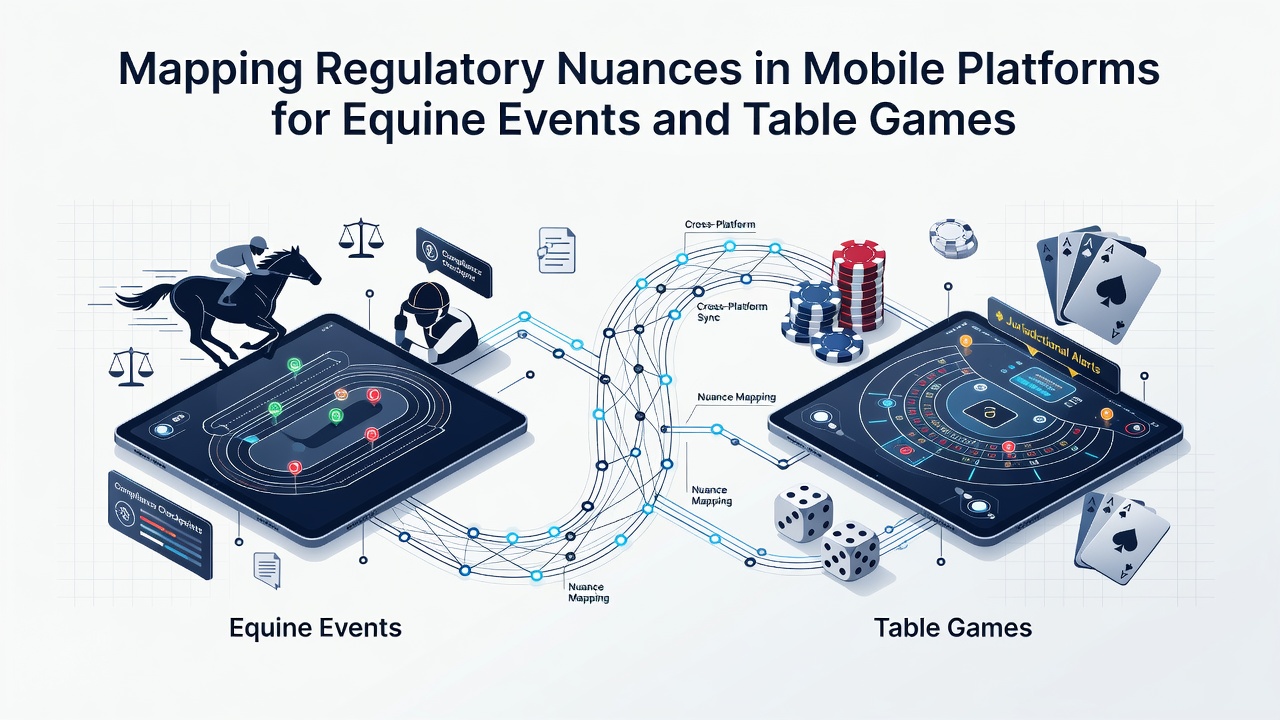
Regulatory frameworks for mobile platforms handling equine events and table games have grown increasingly layered since the expansion of digital wagering, and observers note distinct requirements that separate horse racing applications from casino-style offerings in many jurisdictions. Equine events typically fall under pari-mutuel systems managed by state or provincial racing commissions, whereas table games operate through casino licensing bodies that enforce stricter controls on random number generators and player funds segregation.
Developers must integrate geolocation services that verify user positions within approved boundaries, yet the precision standards differ between racing authorities and gaming control boards. In July 2026 several North American states updated their mobile compliance checklists to require real-time API calls to both racing databases and central gaming servers simultaneously, creating added technical demands for unified applications.
Equine Event Regulations on Mobile Devices
Equine betting platforms face oversight from entities focused on race integrity and wagering pools rather than house-edge mechanics, and this distinction shapes how mobile apps structure their interfaces and data flows. Research from the Association of Racing Commissioners International shows that apps must maintain separate ledgers for pari-mutuel pools to prevent commingling with other revenue streams, while also complying with tote system synchronization rules that update odds every few seconds during live races.
Age verification protocols often rely on state-issued IDs cross-checked against racing commission databases, and these steps occur before any deposit functions activate. Experts have observed that certain jurisdictions now require biometric confirmation for high-value wagers placed through equine apps, a measure introduced to reduce account sharing during major events like the Breeders' Cup series.
Table Game Requirements in Mobile Environments
Table game applications encounter rules centered on game fairness testing and responsible gambling tools that exceed those applied to racing platforms, and regulators demand regular third-party audits of shuffle algorithms and payout percentages. Data from the Canadian Gaming Association indicates that mobile table game providers must display real-time session timers and loss-limit prompts that cannot be disabled by users, whereas equine apps face fewer mandatory interruptions during race sequences.
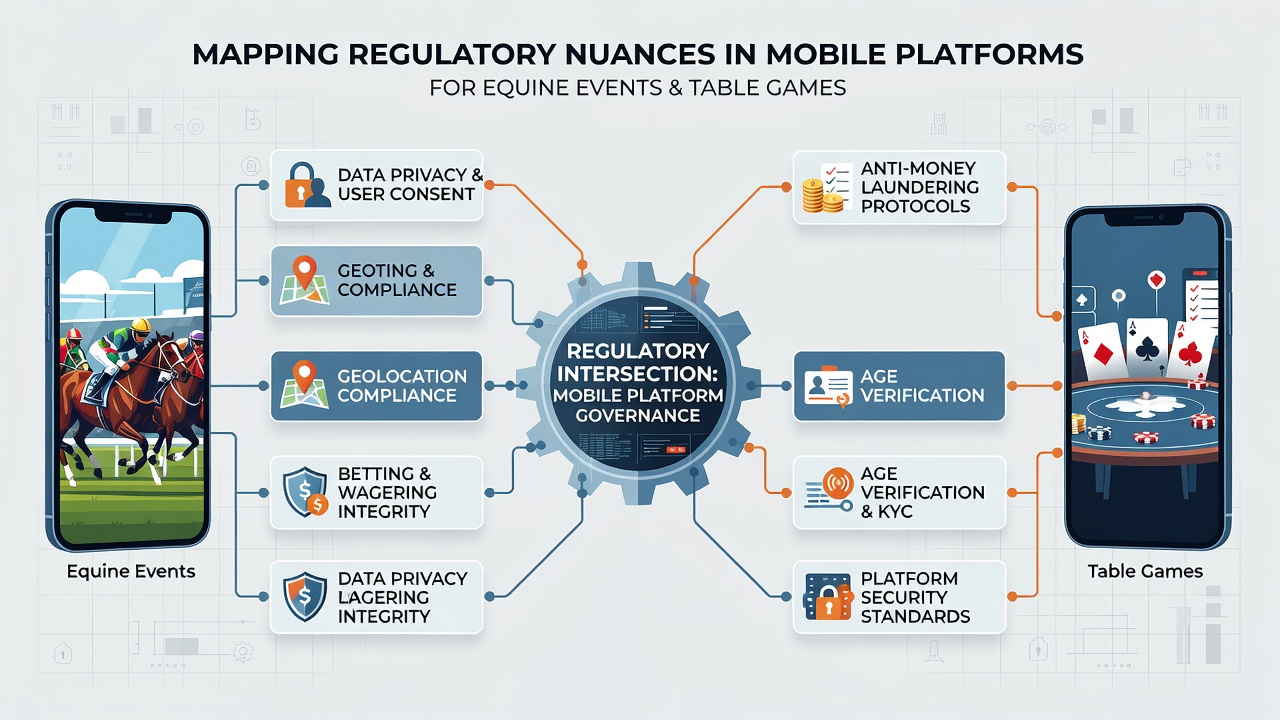
Payment processing rules also diverge sharply, with table game operators required to route transactions through licensed financial institutions that report to gaming authorities, while equine platforms sometimes utilize racetrack-specific settlement systems tied to on-site betting windows. In July 2026 the Nevada Gaming Control Board expanded its mobile certification process to include penetration testing for both categories, yet table game apps received additional scrutiny around encryption standards for live dealer streams.
Cross-Jurisdictional Challenges
Operators attempting to serve multiple regions must map overlapping rules that govern data storage, advertising content, and player self-exclusion lists, and this mapping exercise becomes especially complex when equine and table game features coexist in a single mobile product. Authorities in Australia and several European countries maintain distinct licensing tracks for each activity, requiring separate submissions even when the underlying platform code remains identical.
Those who've studied these systems point to variations in how regulators treat promotional bonuses: table game bonuses often trigger wagering requirements measured in game rounds, whereas equine promotions tie to race-specific conditions that reset with each event. Compliance teams therefore maintain dual tracking systems to avoid cross-contamination of bonus funds between the two verticals.
Technical Implementation Patterns
Platform architects address these nuances by building modular compliance layers that activate different rule sets depending on the selected product category, and this approach allows a single codebase to satisfy both racing commission audits and casino licensing reviews. Geofencing libraries must query multiple regulatory endpoints, while session management modules enforce varying timeout periods based on whether the user engages with races or table games.
Figures from industry reports reveal that applications supporting both verticals experience longer certification timelines, often extending by four to six weeks when additional security reviews for table game RNGs are required. In July 2026 several provinces in Canada introduced unified reporting portals that accept submissions covering both equine and table game activities, reducing some duplication for operators already maintaining separate compliance teams.
Conclusion
Mapping regulatory nuances across mobile platforms for equine events and table games requires ongoing attention to jurisdiction-specific mandates that continue evolving with technology and policy shifts. Organizations that maintain detailed matrices of requirements across racing commissions, gaming control boards, and international bodies position themselves to adapt quickly when new rules emerge in any given market. The technical and procedural distinctions remain central to successful multi-product deployments.